Selene 78 Ocean Explorer
23.93 m · 78'6" LOA
The 72’s layout, with significantly more room to operate, live and entertain.
View model


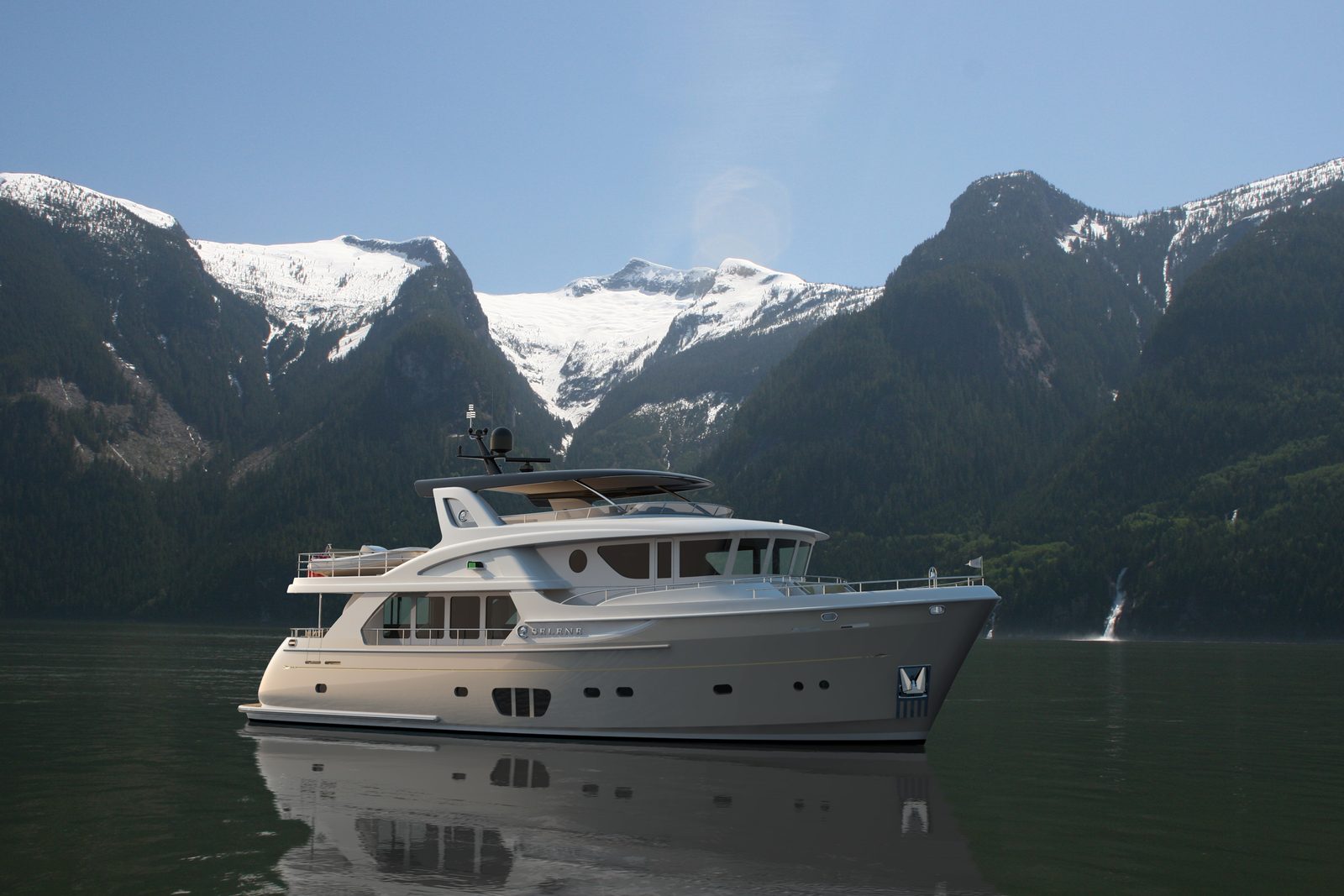
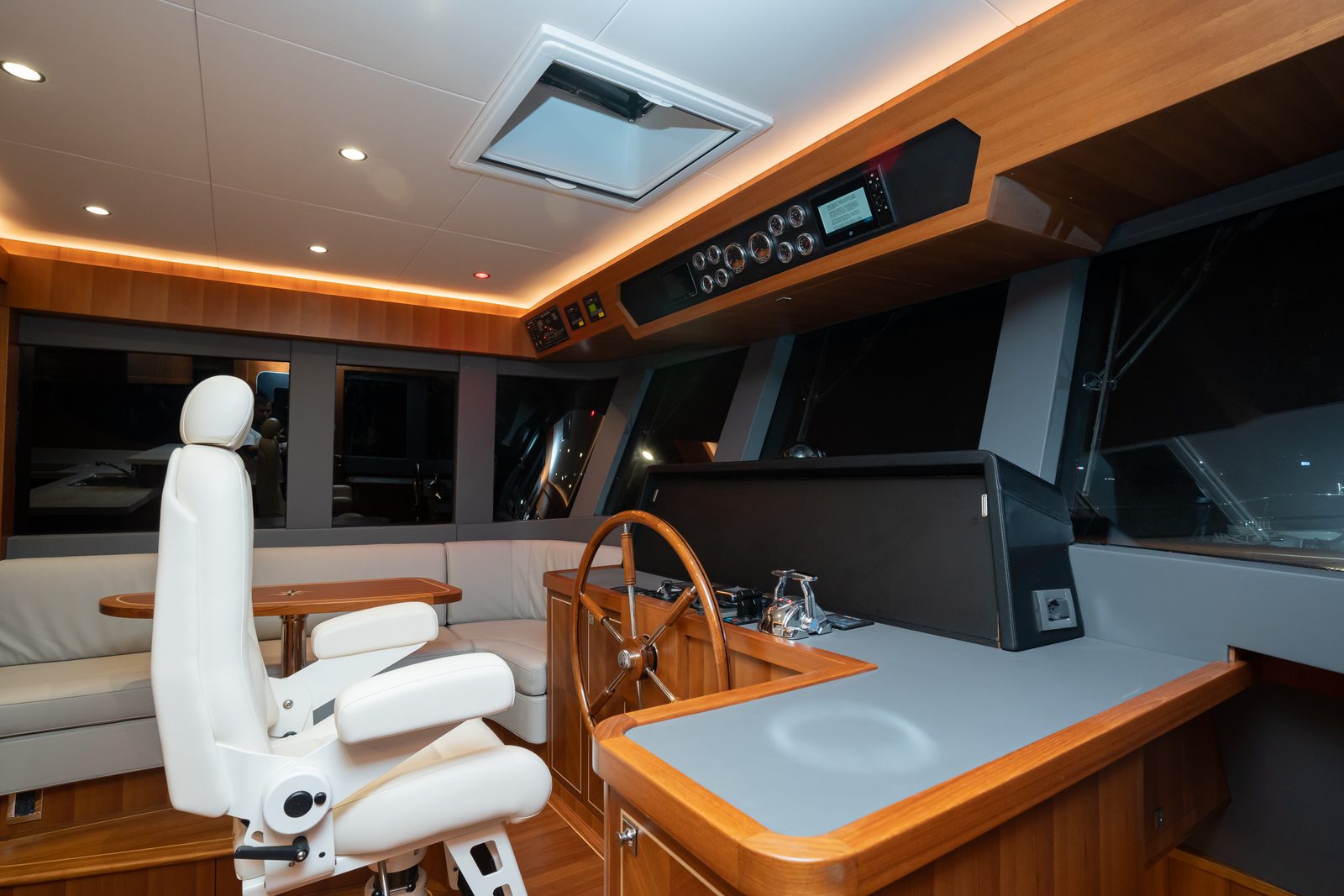
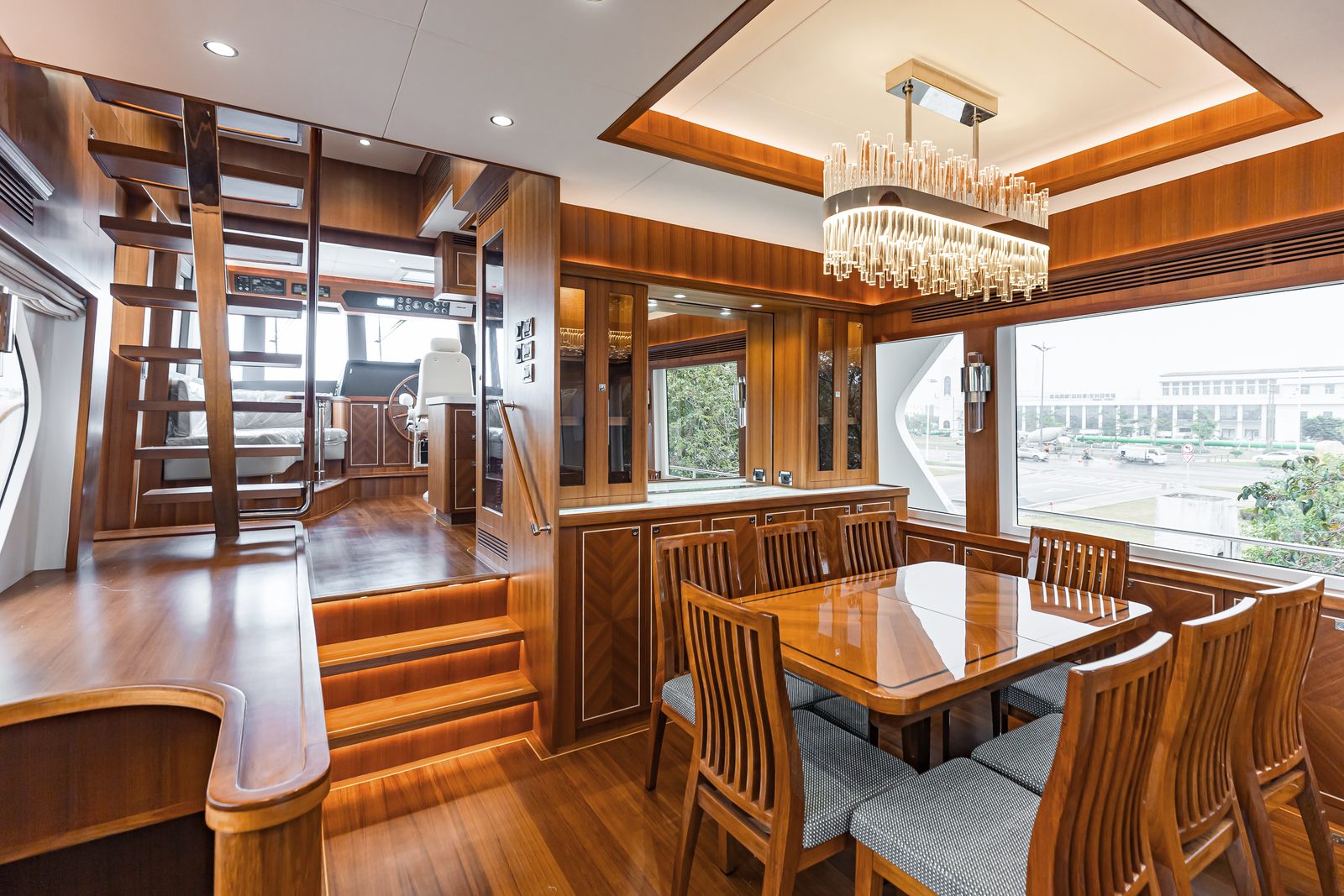
As part of our new Ocean Explorer series, the Selene 72 Ocean Explorer features a more open layout, larger windows and sleeker exterior lines than a comparable Selene Classic Explorer.
Beyond the contemporary look and brighter interior, the Ocean Explorer maintains the performance and safety trademarks of every Selene. This includes a powerful raised pilothouse, a Portuguese bridge, and a seaworthy ‘Deep Hull’ designed for long-range yachting.
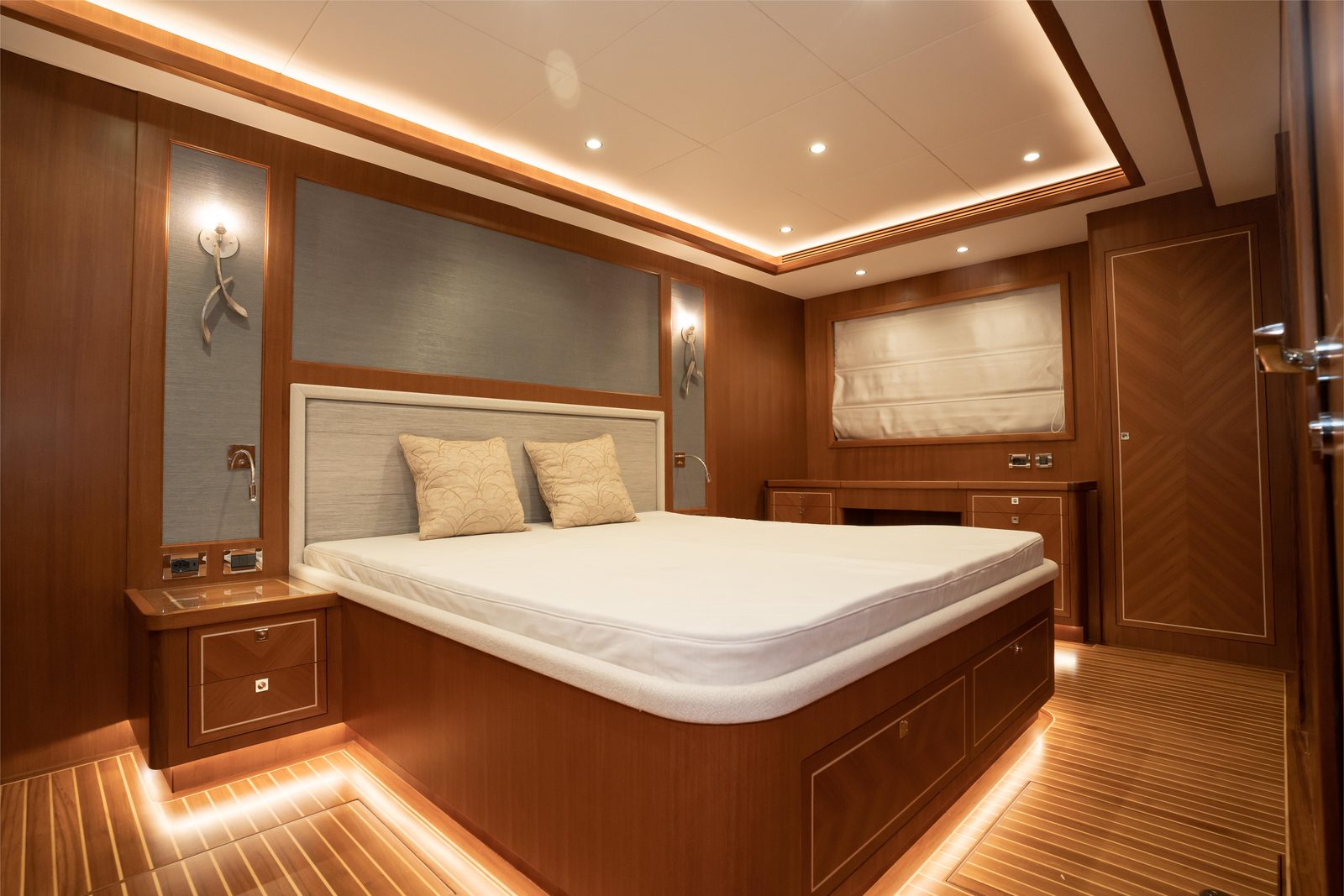
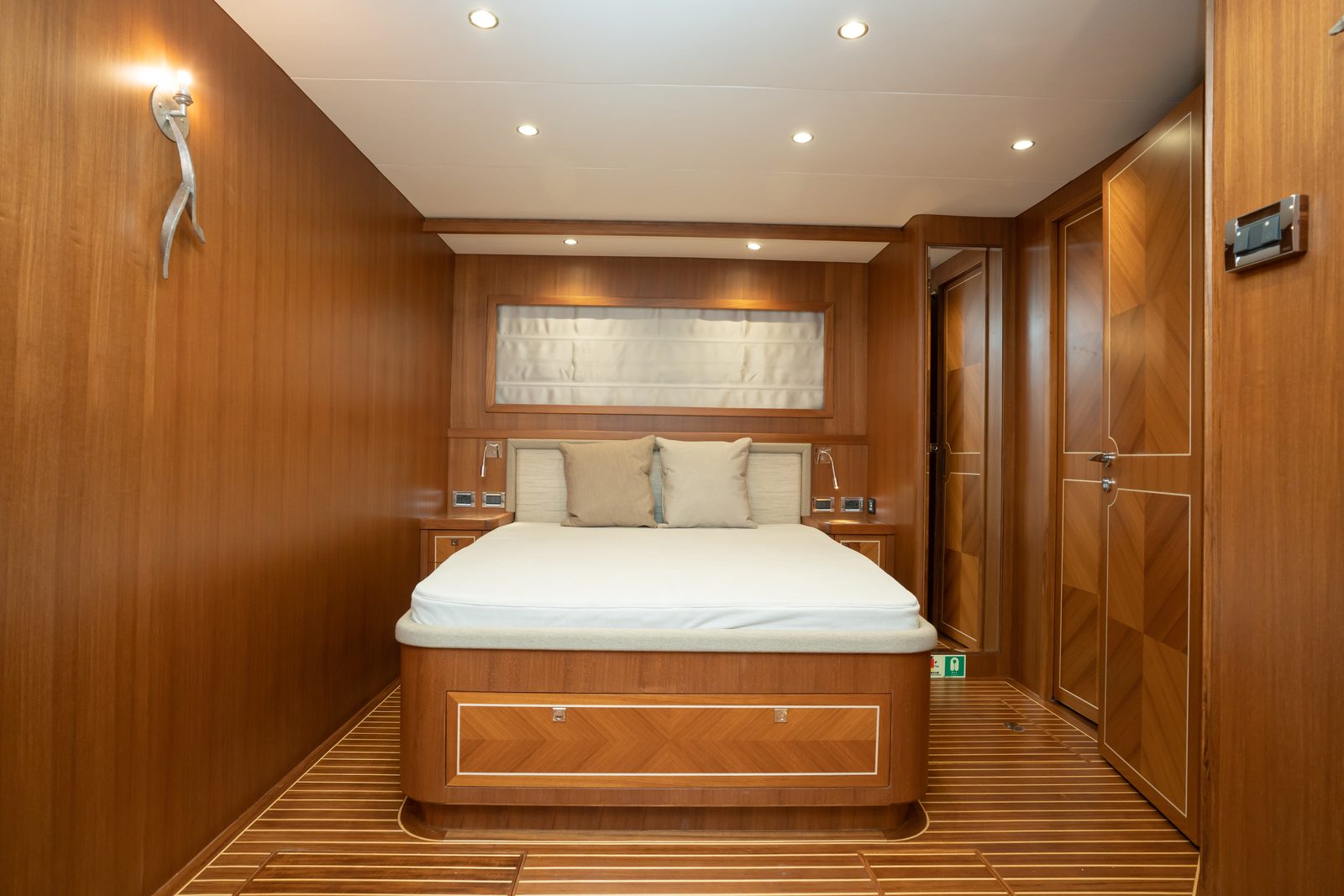
Featuring standard twin engines, four luxury staterooms, and a standard bar on the flybridge, the Selene 72 Ocean Explorer perfectly balances spaciousness and long-range performance. With a much larger hull than the Selene 64, the 72 provides owners with a smoother ride, as well as an extra stateroom with walk-in closets. These features make the Selene 72 ideal for owners who plan to live on board or do extensive passage-making.
Like all Selene yachts, the Selene 72 Ocean Explorer can be customised to your needs and lifestyle. In addition to a choice of propulsion system and interior finishings, there are multiple deck configurations including wide body and galley configuration.
Put simply, by combining contemporary luxury, traditional craftsmanship and advanced engineering, the Selene 72 Ocean Explorer creates a new benchmark for trawler yachts.
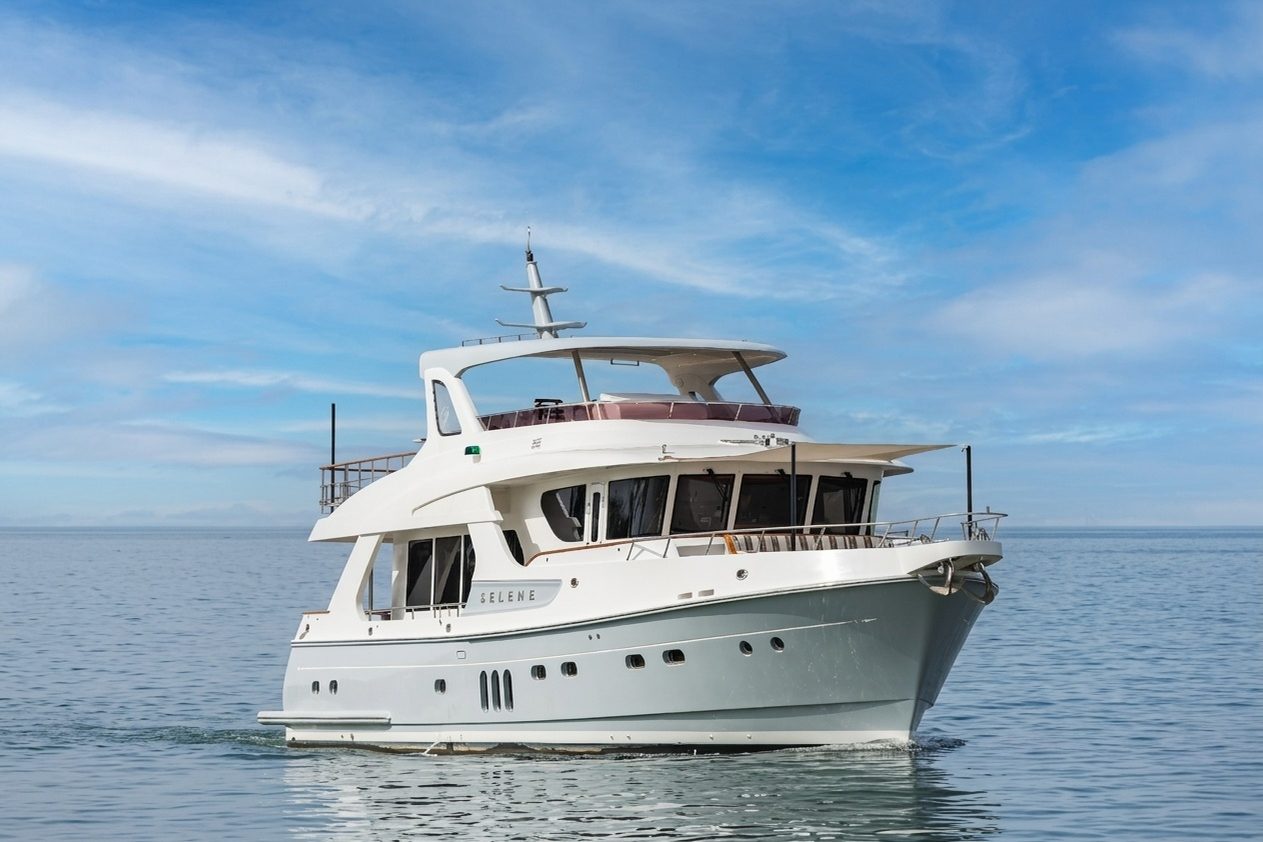
1 / 15Bow quarter in flat calm under a high sky






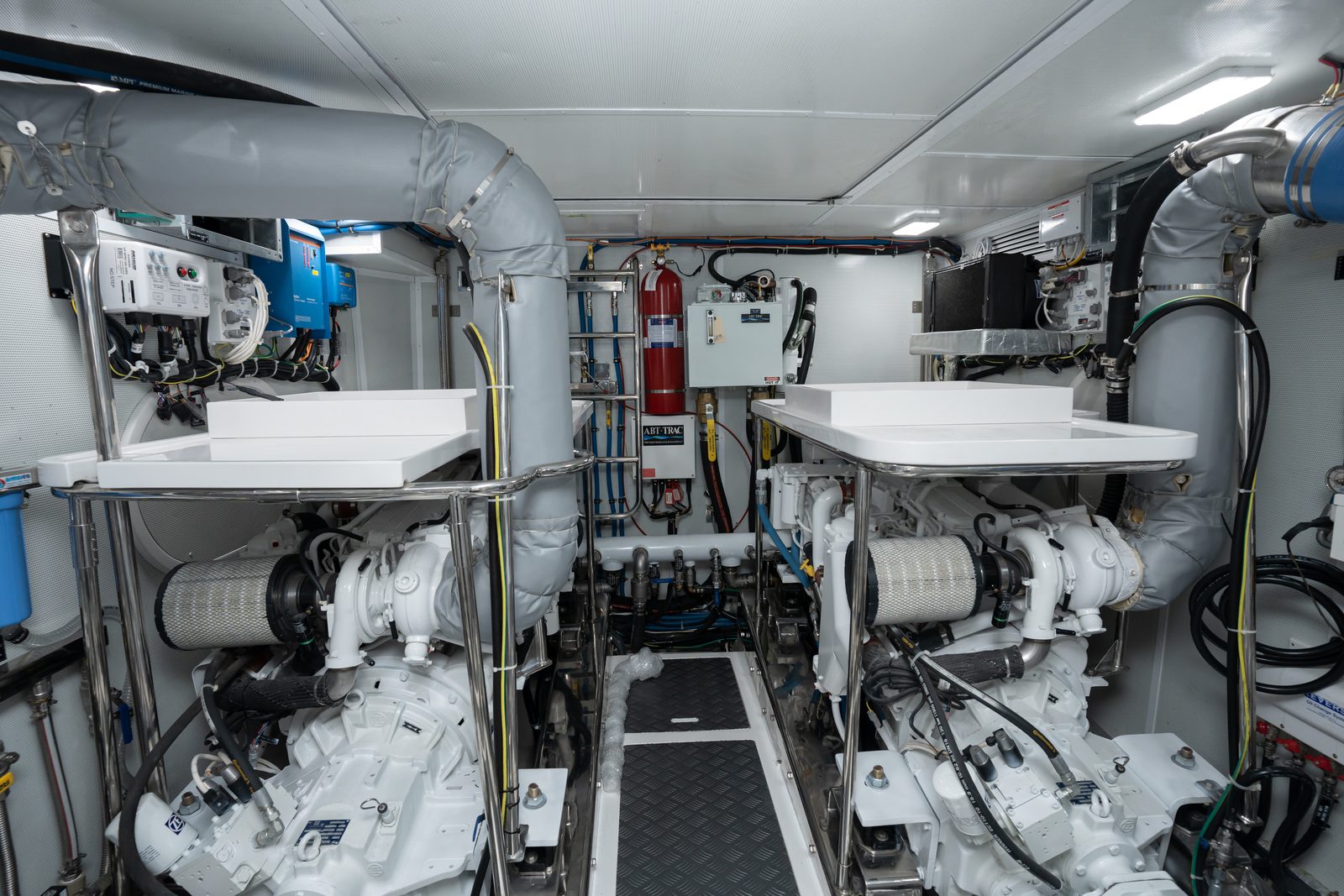
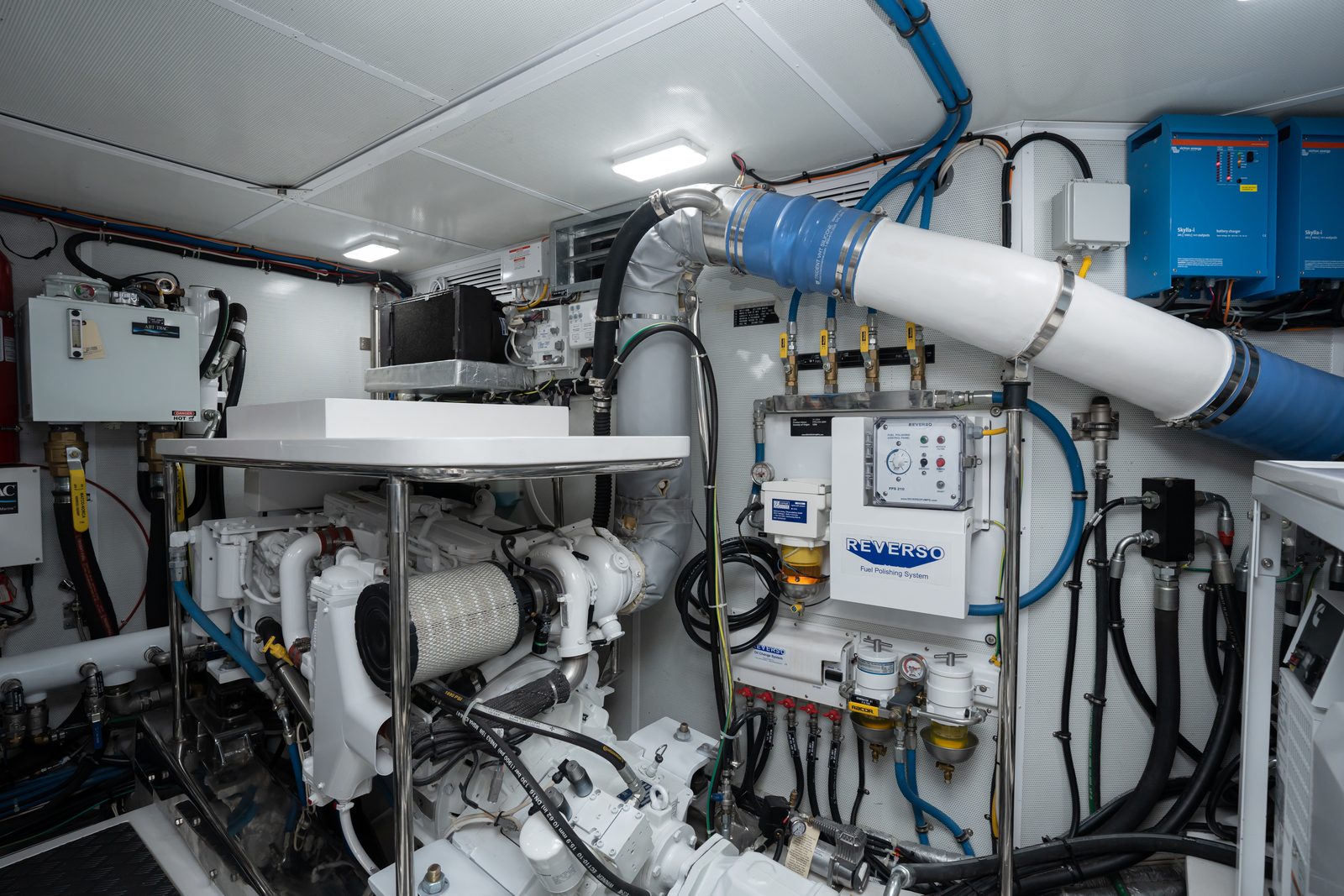
Cuts pitching and wetted-surface drag, which on 72 t of displacement is felt rather than argued about. It is part of why the yard quotes 3,600+ nm @ 8 kn.
Holds her level in a rolling anchorage — 5.92 m of beam is stable under way and still rolls at rest, which is the difference between staying the night and moving on.
Bow and stern together turn her on the spot, so 23.09 m goes into a finger berth without a second pair of hands. Electric or hydraulic, specified to suit the rest of the boat.
Launches and recovers the tender without a crane or a favour, which is what makes a tender something you actually use.
Chilled water rather than split units: one plant, quieter, and it scales to 6 cabins.
Makes fresh water at sea, so the 2,650 l tank is a starting point rather than a limit on a passage of 3,600+ nm @ 8 kn.
One electronics supplier at the raised pilothouse helm, chosen at specification — radar, plotter, sounder and autopilot talking to each other on a boat that will hold 9 kn for days at a time.
Every tank, battery and bilge on one screen, and on your phone — the boat tells you what is happening rather than waiting to be asked.
Deep, fast-charging house capacity: a night at anchor with the air-conditioning running and the generator off.
Panels on the hardtop keep the house bank topped without running the generator, which is quieter for you and cheaper over a season.
Cleans and recirculates the tanks — 11,355 l is a great deal of fuel to trust to whatever came out of the last dock hose.
Hydraulic, so it doubles as a tender lift and a boarding step at whatever height the dock happens to be.
Specification varies by build and by market. Ask us what is standard on a European hull.
Drawings from the builder. Layouts are specified per hull — where the yard offers a choice, more than one arrangement is shown.
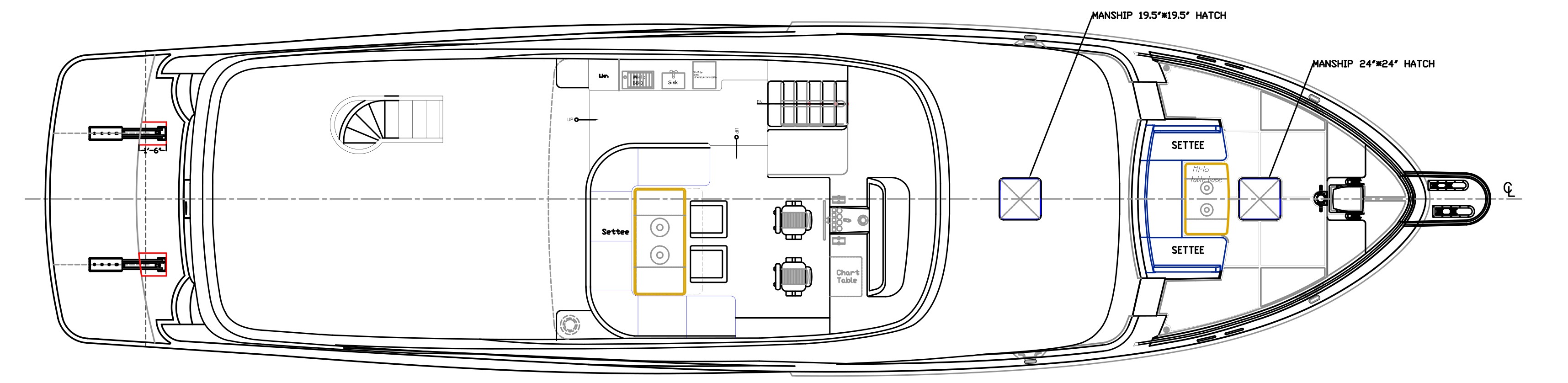
1 / 3Selene 72 Ocean Explorer general arrangement, drawing 1 of 3
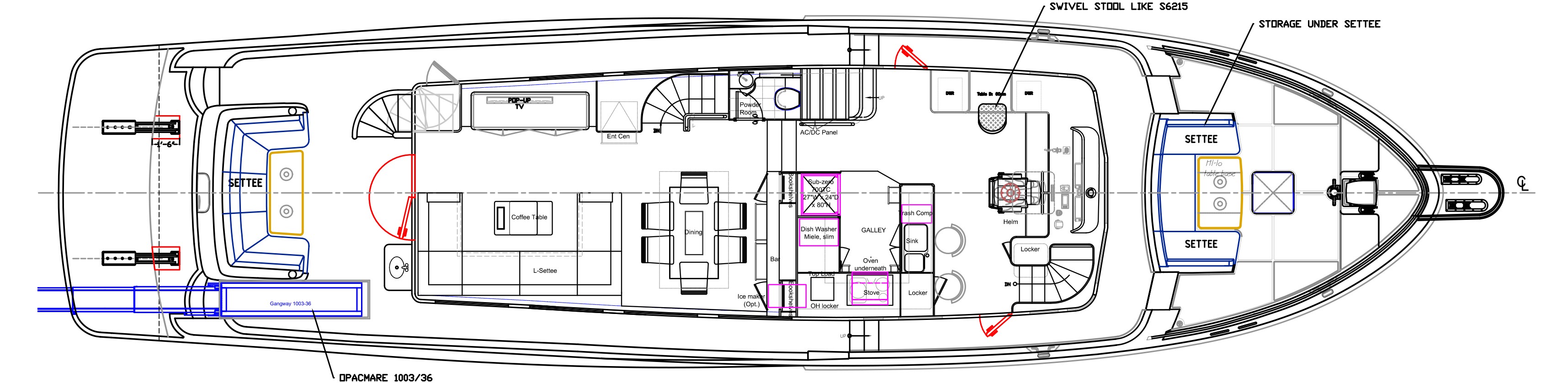
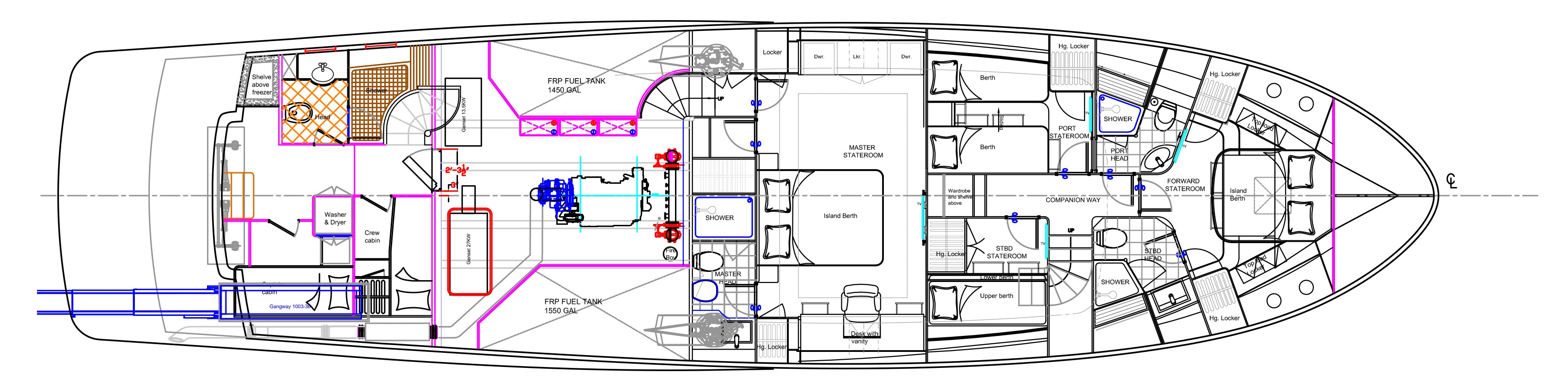
The 72’s layout, with significantly more room to operate, live and entertain.
View model
Three staterooms plus optional crew, and a walk-in closet in the owner’s cabin.
View model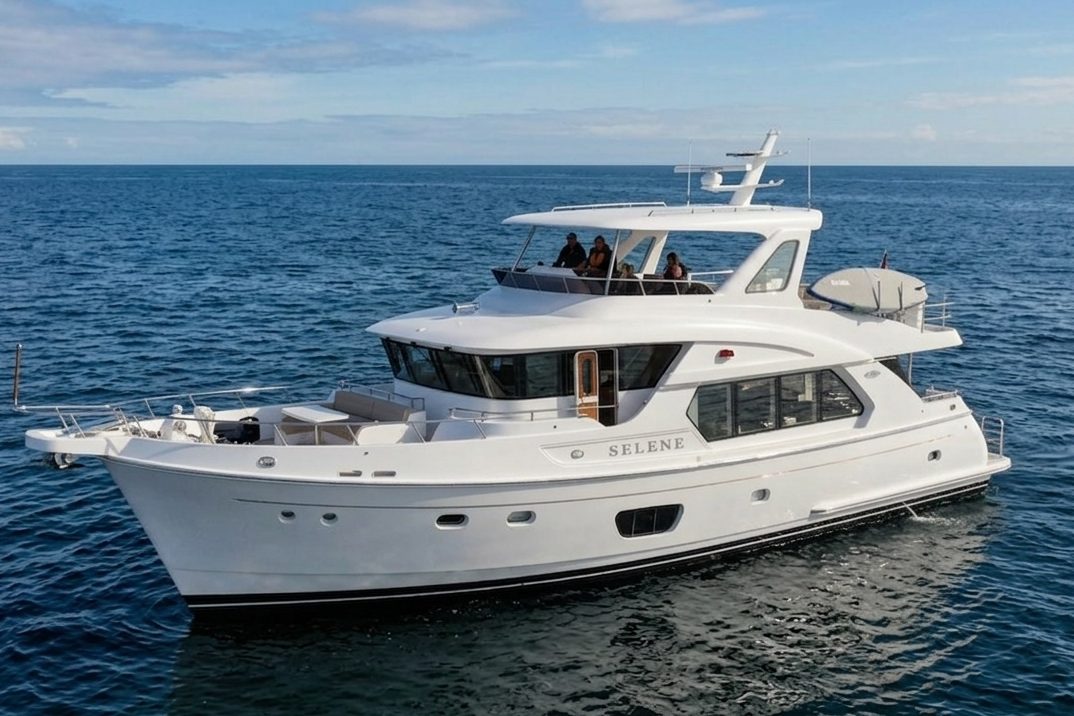
A Guido de Groot design: three staterooms, three deck configurations.
View model